MIST+ Trial
04.03.26
What GPs need to know: How the MIST+ trial is changing OSDB management in children

Obstructive sleep-disordered breathing (OSDB) affects up to 12% of children, contributing to daytime sleepiness, behavioural concerns, and increased risks of depression, loneliness, and poorer school performance.1,2 While adenotonsillectomy remains the first-line treatment, it carries costs, risks, and long wait times that delay symptom relief.1
The MIST+ trial, led by Professor Gillian Nixon, Paediatric Respiratory and Sleep Specialist at Monash Children’s Hospital, has provided compelling evidence that daily saline nasal spray can meaningfully improve OSDB symptoms in children, reducing the need for specialist referral and helping avoid unnecessary surgery.1
Read on for need-to-know insights from the trial and what GPs can apply immediately to their practice.
MIST+ at a glance: Investigating intranasal therapy for resolving OSDB symptoms
Published in JAMA Pediatrics in January 2026, the MIST+ trial was a double-blind, placebo‑controlled randomised clinical trial enrolling 150 children aged 3–12 years already on ENT waitlists for OSDB symptoms.1
Previous studies have suggested that intranasal therapies can help reduce symptoms.3 Building on this, the current study assessed whether 6 weeks of intranasal steroid (INS) offered additional benefit over intranasal saline in children with OSDB who experienced persistent symptoms after a 6-week run-in phase with intranasal saline alone.1,3
Study design summary1
- Run-in phase (6 weeks) – 139 children received once-daily intranasal saline.
- Randomised phase (6 weeks) – 93 children with persistent OSBD symptoms were assigned to continue with once-daily intranasal saline or switch to once-daily intranasal mometasone furoate (50 μg).
- Primary outcome – Symptom resolution defined as a sleep-disordered breathing (SDB) score of less than-1.*
- Secondary outcomes – Included a reduction in the parent-reported perceived need for surgery, and parental satisfaction with intranasal-saline-only treatment at 6 weeks following the run-in phase.
*The sleep-disordered breathing score is a parent-reported composite measure derived from the Brouillette et al. questionnaire that quantifies snoring and nighttime breathing difficulties, with scores less than–1 indicating resolution of symptoms.3
This two‑stage structure enabled researchers to determine the independent effects of intranasal saline vs INS, while adding to the body of evidence supporting the therapeutic value of non-surgical interventions in childhood OSDB. Specifically, intranasal saline can humidify, flush, and clear the nasal mucosa, helping to reduce nasal congestion that contributes to OSDB.4-6
Practice point 1: Daily intranasal saline can be trialled as first‑line treatment for 12 weeks1
After the initial 6-week run‑in, 29.5% of children achieved symptom resolution with intranasal saline alone.1
During the randomised phase, a further 36.4% of children continuing with intranasal saline achieved symptom resolution by 12 weeks.1 Intranasal saline also demonstrated:
- High adherence rates – an average 93.5% of children were compliant with the treatment.1
- Generally mild adverse events – most were unlikely to be related to the study medication.1
These findings support intranasal saline as an accessible, low‑risk treatment that GPs can readily initiate, and one that can resolve symptoms in more than one‑third of children while potentially reducing the need for surgical escalation.1
Practice point 2: Switching to an INS is unlikely to provide additional benefit beyond saline1
Of those who used INS during the randomised phase, 35.6% achieved symptom resolution at 12 weeks, compared to 36.4% who continued with intranasal saline.1 Importantly, there was no clinically significant difference between the INS group and the intranasal saline group for this outcome (risk difference –0.9%; 95% CI, –20.7% to 19.0%; P=0.93).1
Furthermore, no significant differences were observed between groups for the secondary outcomes, including parental satisfaction with treatment.1 Subgroup analysis by age and risk factors at baseline showed that these findings were consistent across all studied children with OSDB symptoms.1
Notably, sustained symptom resolution 12 weeks after the randomised phase began was higher in the saline group (35.7%) than the INS group (20.0%).1
These compelling findings challenge potential assumptions held by both patients and healthcare professionals about the perceived therapeutic superiority of intranasal steroids over nasal saline for OSDB.1 While steroids remain essential therapy for other nasal inflammatory conditions, such as allergic rhinitis, the MIST+ trial suggests limited benefit beyond first-line intranasal saline in OSDB.1,7,8
Practice point 3: Reassess before referring – many children improve without surgery
Combining both treatment arms, around half of children had symptom resolution after using either intranasal saline or INS by week 12.1 Additionally, parents’ perceptions of the need for surgery saw a shift after the initial run-in phase: 64.5% believed specialist intervention was needed at enrolment, falling to 56.3% after 6 weeks of daily intranasal saline.1
This pattern aligns with earlier findings from the original MIST trial published in 2023, which found that 6 weeks of either INS or intranasal saline resulted in resolution of OSBD symptoms in approximately 40% of participants, with no significant difference in treatment effect between the INS and intranasal saline groups.3 Surgeon recommendations for adenotonsillectomy also reduced by around 44% after 6 weeks of intranasal saline therapy.3
Given long waitlists and the burden of surgical intervention, GPs play a pivotal role in early, conservative management of OSDB. Both the MIST and MIST+ trials support the efficacy of intranasal therapy, led by GPs,
for: 1,3
- Improving symptoms in a meaningful proportion of children
- Helping to identify those who truly require specialist assessment
- Reducing demand for surgical referrals and healthcare load
Turning insights into action
The treatment pathway for children presenting with OSDB, as recommended by the MIST+ trial authors, is:1
- Start with once-daily intranasal saline as first-line therapy.
- Review after 12 weeks before considering referral.
- Refer thoughtfully, focusing on children with continuing, clinically significant symptoms.
Together, the MIST and MIST+ trials give GPs confidence that first-line intranasal saline delivers clinically meaningful improvement across multiple outcomes, comparable to intranasal steroids.1,3 Importantly, this evidence also strengthens the role of GPs in initiating low-risk, conservative management before escalating to specialist care.
As the evidence base continues to grow, clinical practice guidelines will hopefully evolve to reflect this care pathway, supporting better outcomes for children and their families, as well as the broader health system.
FESS® How-To Videos
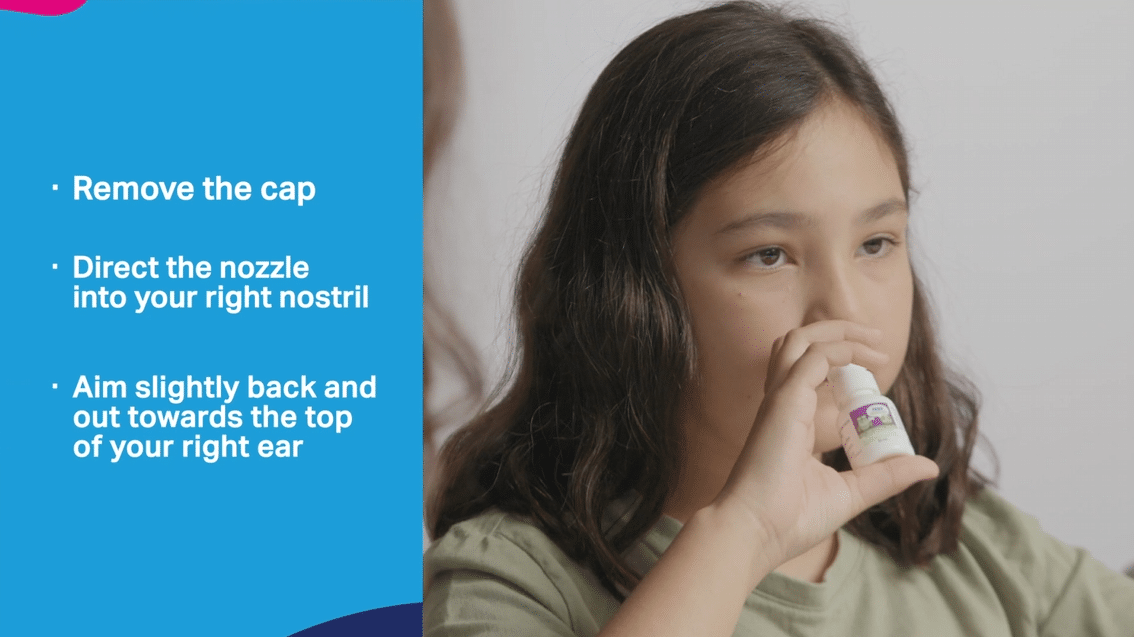
Help show patients the correct technique when using FESS nasal sprays and washes
Healthed Product Explainer
(5-min watch)
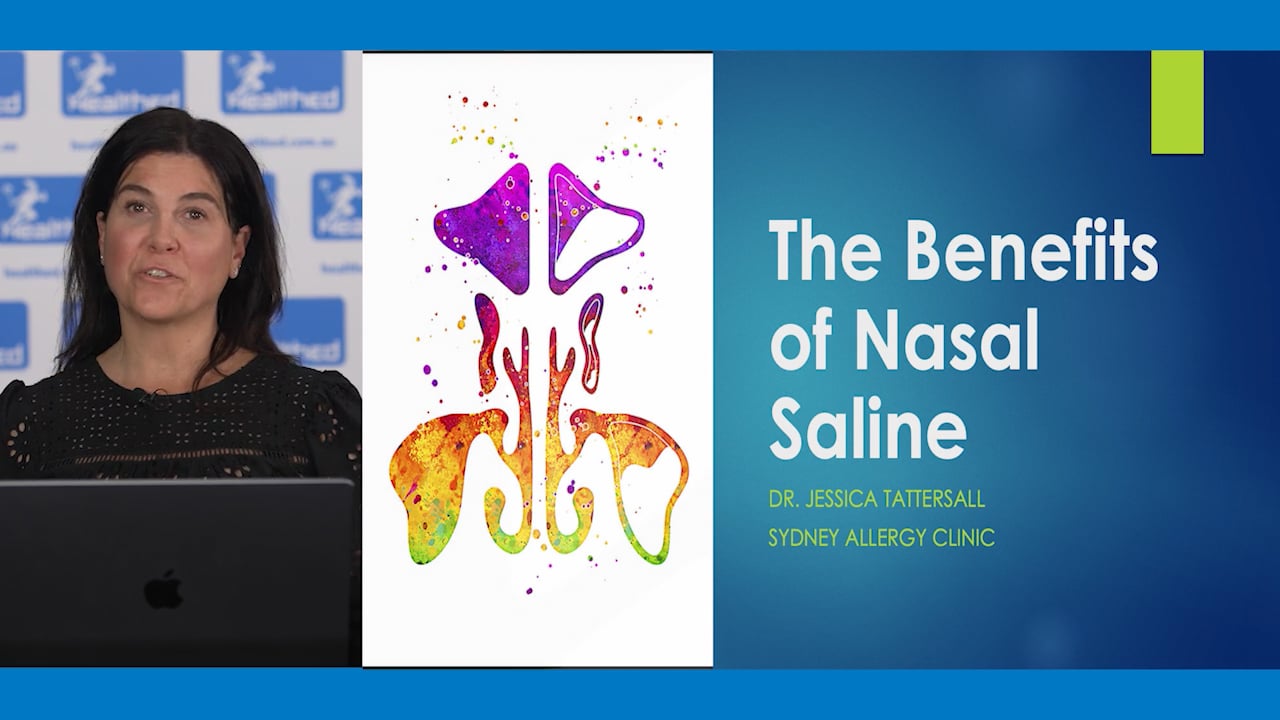
Hear Dr Jessica Tattersall explain how nasal saline benefits people both with and without sinonasal pathology
To download this resource, please login or register.
CI, confidence interval; ENT, ear, nose and throat specialist (otorhinolaryngologist); GP, general practitioner; INS, intranasal steroid; OSDB, obstructive sleep-disordered breathing; SDB, sleep-disordered breathing.
References:
- Nixon GM, et al. JAMA Pediatr. Published online January 20, 2026.
- Liu J, et al. Psychiatry Res. 2016;242:218–225.
- Baker A, et al. JAMA Pediatr. 2023 Mar 1;177(3):240–247.
- Magliulo G, et al. Acta Otorhinolaryngol Ital. 2019;39(4):250–256.
- Santoro E, et al. Rhinology Online. 2021;4:1–16.
- Papsin B, McTavish A. Can Fam Physician. 2003;49:168-73.
- Australasian Society of Clinical Immunology and Allergy (ASCIA). Allergic Rhinitis Clinical Update. 2024. https://www.allergy.org.au/hp/papers/allergic-rhinitis-clinical-update (accessed February 2026).
- Hermelingmeier KE, et al. Am J Rhinol Allergy. 2012;26(5):e119–e125.
©Care Pharmaceuticals 2026. FESS® is a registered trademark of Care Pharmaceuticals. All rights reserved. March 2026.
This information is intended for use by healthcare professionals only.