Gastrointestinal Health
30.09.2025
How GPs can support GI tolerability for patients taking anti-obesity medications

Prescription of GLP-1 receptor agonists has risen rapidly in Australia, driven by the growing body of evidence reinforcing their multiple benefits – particularly effectiveness for weight management.1,2 But how best to help patients work through the common gastrointestinal (GI) side effects associated with these game-changing anti-obesity medications (AOMs), and support persistence with treatment?3
The answer lies in recognising that many of these side effects are not only predictable, but manageable through informed lifestyle interventions, thoughtful dose adjustments, and strategic use of over-the-counter (OTC) preparations.3 Read on for a practical, expert-led approach to helping your patients feel comfortable and in control when starting an AOM.
What patients may expect when starting an AOM
Given that these medications work in part within the digestive system, it’s not surprising that the most common side effects associated with AOMs are GI in nature.3,4 However, the pathogenesis of GI side effects associated with GLP-1 receptor agonists is not fully understood and appears to be multifactorial.5 Associated factors include delayed gastric emptying, altered intestinal motility, and direct effects on the central nervous system.5,6
Luckily, these side effects tend to be dose-dependent, mostly occurring during initiation and dose escalation, and are typically mild to moderate in nature.3 The four most common GI side effects are nausea, vomiting, diarrhoea, and constipation, although different agents exhibit varying risk profiles:7
| Agent | Prevalence of GI side effects (%)* | |||
|---|---|---|---|---|
| Nausea | Vomiting | Diarrhoea | Constipation | |
| Liraglutide8 | 39.3% | 15.7% | 20.9% | 19.4% |
| Semaglutide9 | 38.3% | 21.8% | 26.8% | 21.8% |
| Tirzepatide10 | 27.5% | 10.8% | 20.9% | 13.6% |
*Side effects reported in at least 1% of patients on active treatment and more frequently than in patients on placebo from phase 2/3 clinical trials.8-10
Most of these GI side effects will resolve over time.3 However, because poor tolerability may cause patients to consider discontinuing treatment, supporting those who experience GI side effects through those first few weeks is crucial.3,5
General principles for supporting GI tolerability with AOMs
Acknowledging a need for specific guidance on this topic, a team of experts led by obesity expert Dr. Sean Wharton published a paper in 2021 that outlined practical strategies to manage GI side effects in the clinical setting, which was supported by a subsequent multidisciplinary expert consensus paper published in 2022.3,5 These authors introduced a strategy known as “the three E’s”, covering guidance for patient education, dose escalation, and effective side effect management.5
Education
- Proactively inform patients about the potential side effects when initiating treatment, to help set realistic expectations.5
- Advise patients on strategies for managing these symptoms if they occur (see ‘Effective Management’ below).5
Escalation
Apply a gradual, individualised approach to dose escalation tailored to the patient’s response,5 which may include:4
- Extending the current dosing phase for 2 to 4 weeks before moving forward to the next dose.3
- Reverting to the previous dose if GI side effects appear just after escalation, then increasing dose at a more gradual pace.3
Effective Management
Take a stepwise approach to help relieve symptoms:
- Begin with dietary modifications as the first-line strategy (e.g., eating smaller portions and/or increasing meal frequency, choosing easy-to-digest/bland foods, increasing fluid intake, avoiding sweet meals, etc.)3,5
- If symptoms persist or become more severe, temporarily pause dose escalation and assess for other potential contributing factors (e.g., concomitant medications). Reinforce hydration and dietary measures and selectively introduce short-term pharmacological interventions (e.g., antiemetics, prokinetics, anti-diarrhoeals) if necessary; however, these should not be used as a long-term management strategy.3,5
- If symptoms continue, consider decreasing the dose and retrying dose escalation once symptoms are controlled, or switching to an alternative GLP-1 receptor agonist.3,5
In clinical practice, patients who experience GI side effects on an AOM can still reach the full recommended dose. Flexibility with dose escalation and appropriate symptomatic management are key tools for helping patients tolerate and persist with treatment.3
Specific measures for managing nausea, vomiting, and diarrhoea
Nausea and diarrhoea are most likely to occur within the first four weeks of treatment.3 Diarrhoea symptoms may last for a couple of days, while nausea and vomiting will typically resolve within eight days of onset.3
In addition to the general dietary modifications noted above, more specific dietary changes can also help minimise side effects. For nausea, recommend eating crackers, apples, mint, and ginger-based drinks 30 minutes after administering treatment. For diarrhoea, encourage patients to consume chicken broth, rice, carrots, and fruits, while avoiding dairy products, coffee, alcohol, and soft drinks.3
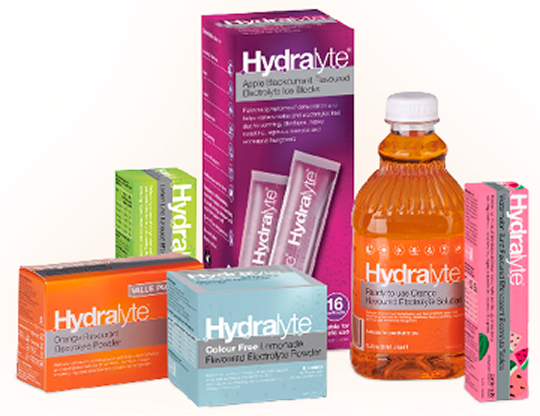
Maintaining hydration is particularly important when vomiting and diarrhoea are present, as dehydration can lead to complications including dizziness, confusion, and fatigue.5 For rapid rehydration, consider using an oral rehydration solution (ORS) such as Hydralyte, as they are formulated with the correct balance of glucose and electrolytes to rehydrate faster than water alone.11-13 By activating sodium-glucose co-transporters in the intestinal lumen, these hypotonic solutions create an osmotic gradient that facilitates fast and effective rehydration.12,13 In contrast, other electrolyte or sports drinks are typically isotonic, which move water into the body slower than an ORS, so patients should be discouraged from using sports drinks for dehydration.12,13
If dietary changes and hydration alone are inadequate, pharmacological support can be considered.3 Antiemetic or prokinetic medications can be prescribed for nausea and vomiting, with domperidone recommended over metoclopramide to minimise the risk of extrapyramidal side effects.3 For persistent diarrhoea, probiotic and/or anti-diarrhoeal supplements such as loperamide may be trialled.3
Specific measures for managing constipation
Among the GI side effects described, constipation typically persists longer than the others.3 Patients tend to reduce their water intake secondary to feelings of gastric fullness, which may also contribute to constipation.3 To manage symptoms, ensure patients are consuming an adequate amount of fibre and are keeping well hydrated – an ORS may also be helpful for this.3 Encourage patients to increase their physical activity and, if necessary, recommend a stool softener to help with bowel movements.3
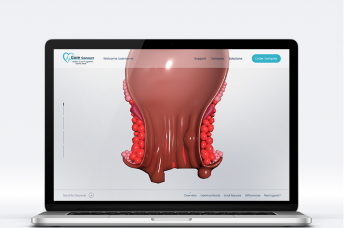
Given that both obesity and constipation are risk factors for anorectal conditions such as haemorrhoids and anal fissures ,14 discussions about GI side effects also present a good opportunity to ask patients about their bowel habits. Screening for these common issues helps to facilitate early detection and management – especially as patients may feel embarrassed to bring it up themselves. These conditions will also benefit from increased hydration and fibre intake, as well as simple OTC topical treatments, such as glyceryl trinitrate ointment (Rectogesic) for anal fissures.15
By implementing these management strategies, doctors can support their patients to achieve sustainable use of their AOM, where they are successfully losing weight, tolerating therapy, and experiencing meaningful improvements in overall health and quality of life.
Order Hydralyte Samples
FREE samples, delivered directly to your practice at no cost
To download this resource, please login or register.
Access the 3D Interactive Rectum Model
An in-consultation tool to assist with patient conversations about anorectal conditions
Please login or register to gain free access to Care Connect.
Please login or register to gain free access to Care Connect.
AOM: anti-obesity medication; GI: gastrointestinal; GLP-1: glucagon-like peptide-1; GP: general practitioner; ORS: oral rehydration solution; OTC: over-the-counter.
References:
- Ansari HU, et al. Endocr Pract. 2024;30(2):160–71.
- Lin J, et al. Eur J Clin Pharmacol. 2023;79(9):1239-1248.
- Gorgojo-Martínez JJ, et al. J Clin Med. 2022;12(1):145.
- Zheng Z, et al. Signal Transduct Target Ther. 2024;9(1):234.
- Wharton S, et al. Postgrad Med. 2022;134(1):14–19.
- Nauck MA, et al. Mol Metab. 2021;46:101102.
- Ismaiel A, Scarlata et al. Int J Obes (Lond). Published online August 13, 2025.
- Saxenda (liraglutide) Product Information (19 December 2024).
- Wegovy (semaglutide) Product Information (4 August 2025).
- Mounjaro (tirzepatide) Product Information (16 September 2025).
- World Health Organization (WHO). Oral rehydration salts. Production of the new ORS. 2006. Available: https://www.who.int/publications/i/item/WHO-FCH-CAH-06.1 (accessed September 2025).
- Wright EM, et al. J Intern Med. 2007;261(1):32–43.
- Jeukendrup AE, et al. Nutr Metabl (Lond). 2009;6:9.
- Gardner IH, et al. Ann Gastroenterol. 2020;33(1):9-18.
- Anal fissure [published 2022 Aug]. In: Therapeutic Guidelines. Melbourne: Therapeutic Guidelines Limited. Available: https://www.tg.org.au (accessed September 2025).
©Care Pharmaceuticals 2025. Hydralyte® and Rectogesic® are registered trademarks of Care Pharmaceuticals. All rights reserved. October 2025.
This information is intended for use by healthcare professionals only.